
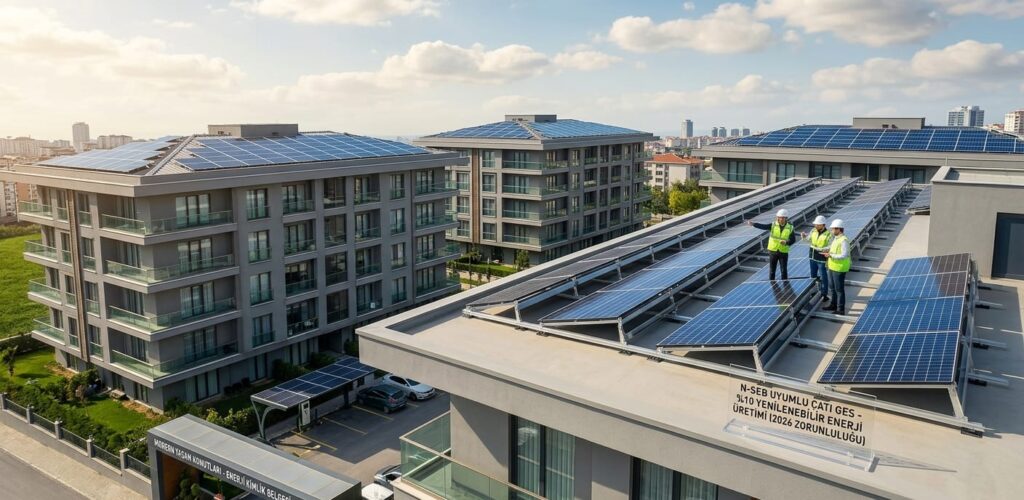
Solar PV Requirement in New Buildings: Are You Ready for NSEB Standards?
Energy efficiency and the integration of renewables in Türkiye are no longer optional—they are now a legal mandate. With the introduction of the Nearly Zero Energy Buildings (nZEB) framework, rooftop solar installations have become a cornerstone of modern construction..
But how does this regulatory shift impact developers and homeowners? Why has 'infrastructure-ready' become an insufficient standard? Here are the essential insights.
What are Nearly Zero Energy Buildings (nZEB) and Why Do They Matter?
The nZEB concept refers to buildings that exhibit high energy performance by maintaining minimal energy demand, which is primarily supplied by renewables. Under the regulations enacted by the Ministry, buildings over a certain size must now achieve at least a 'B' rating on their Energy Performance Certificates (EPC).
"Wiring Is Not Enough: The Mandatory Hardware Requirement
One of the biggest misconceptions in the industry is that merely preparing the piping or cabling infrastructure is sufficient for regulatory compliance. However, the Parking Regulation and nZEB criteria state in clear terms:
Renewable energy systems (solar panels, inverters, etc.) must be physically installed and delivered in operational condition.
Particularly in mass housing projects and commercial areas, it is mandatory that at least 10% of the project's total energy demand be met by these systems.
Advantages of Rooftop Solar Investments
Beyond legal mandates, rooftop solar energy systems are among the most significant factors that increase property value:
Energy Independence: They provide fixed production costs against constantly rising energy prices.
Rapid Payback: Thanks to current incentives and net-metering regulations, systems can pay for themselves in as little as 4–6 years, depending on the quality of the equipment used.
Environmental Prestige: Buildings that reduce their carbon footprint are far more attractive to modern investors and tenants.
Conclusion
The nZEB framework aligns our structures with future energy trends. Regardless of scale—from boutique 20-flat projects to large-scale residential developments—a solar power system backed by sound engineering turns a regulatory mandate into a rewarding financial asset.
Contact our professional team today to build the buildings of the future and implement nZEB-compliant solar energy solutions for your projects.
