
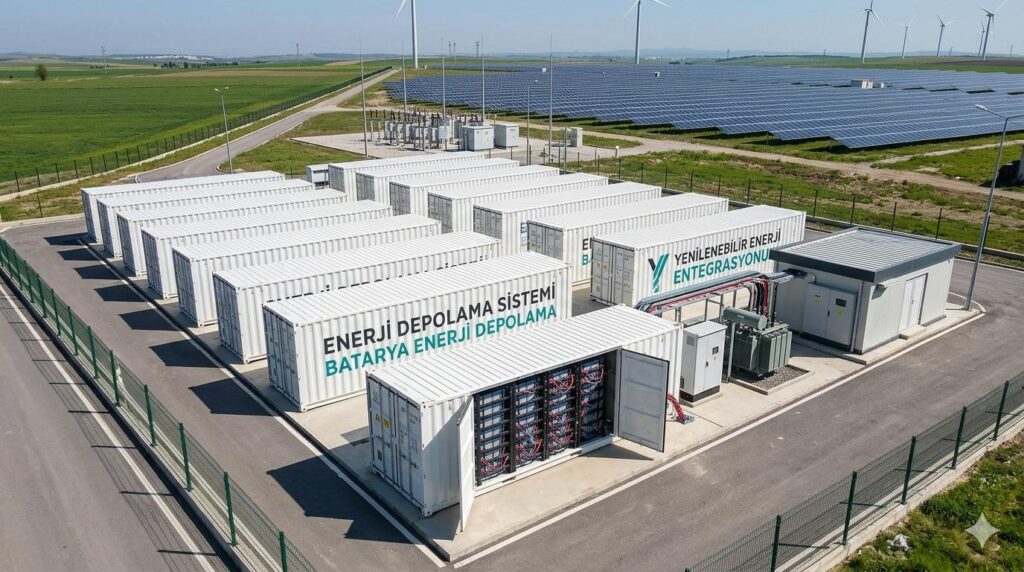
Storing the Power from the Sun: Key Benefits of Solar PV Systems (SPV) and Energy Storage Systems (ESS)
As the global transition to renewable energy accelerates, energy storage technologies are becoming one of the most critical components of this transformation. Solar energy is inherently intermittent; it can only be generated during daylight hours and under favorable weather conditions. This is precisely where storing the produced energy makes the system not only “green” but also “reliable.”
- Uninterrupted Energy and Supply Security
The primary benefit of storing energy generated by solar PV systems is the ability to continue benefiting from solar power during nighttime hours or cloudy weather when production is not possible. Storage units capture excess energy produced during the day and release it back into the system whenever it is needed. This reduces dependency on the grid and maximizes energy supply security. - Grid Stability and Balancing
Solar energy systems can be affected by sudden weather changes, which may cause voltage fluctuations in the grid. Energy Storage Systems (ESS) act as a buffer that smooths out these fluctuations. They regulate grid frequency and respond quickly to sudden load changes, helping prevent system instability or collapse. - Economic Efficiency and Cost Savings
Energy prices vary throughout the day depending on demand (peak hours). With storage systems, low-cost energy generated from solar power can be used during the most expensive hours. Additionally, by increasing self-consumption rates, they minimize the need for businesses or households to purchase energy from the grid, resulting in significant long-term cost savings. - Reducing Carbon Footprint
When energy is not stored, fossil fuel power plants must come into operation during hours when there is no sunlight. However, as storage capacity increases, it becomes possible to use clean energy 24 hours a day. This directly contributes to reducing carbon emissions and achieving sustainability goals.
